The 2 types of member travel
Your association or nonprofit is thinking about running travel for members / donors. Great idea, but what's the program for? There are only two reasonable answers.
- It's a benefit, priced to break even, that makes membership / donations worth renewing.
- It's cultivation, priced to cover cost with a margin, that deepens your bond with people who already give.
Pick one. A trip that tries to be both becomes a lackluster version of each, and your travelers can tell.
Below we’ll cover: the call to make on pricing, who to invite, five numbers to capture before departure, the follow-through, and how you'll know whether it worked.
The second trip test
We’ve watched groups judge these programs on the post-trip survey: high net promoter scores, warm feelings, or photographs everybody loved.
Then, the same group would struggle to fill next year's trip, which told us the survey wasn't measuring anything useful.
So we advised clients to change their measurement approach. We call it the second trip test: what share of your travelers book again inside 24 months?
That number is more useful because it reveals people’s true preferences. It costs your members real money and real vacation days to answer it. Over 30 percent and your program is doing great. Under 15 percent and it’s a failure, no matter your survey said.
Why does retention matter this much? Because it's the whole argument for running the trip. The Fundraising Effectiveness Project found overall donor retention at 26.3 percent at midyear, with new donor retention at 11 percent and repeat donor retention at 36.3 percent, across 4 million donors giving $5.3 billion at more than 15,000 nonprofits.
So if your trip moves one person from a first gift to a second, it's done something your email marketing and social media campaigns typically can't.
Who to invite
Who gets an invitation? Your choice indicates what the trip should look like.
The data gives us a specific answer. Donors giving $5,000 to $50,000 retain at nearly 43 percent, and repeat donors account for more than 60 percent of total fundraising dollars. The biggest donors, those giving $50,000 and up, give about half of all dollars raised and fell 7.7 percent.
Take note: middle-tier supporters have good retention, there are enough of them to fill a trip twice over, and they're the group most likely to move up a tier after getting personalized attention from your organization.
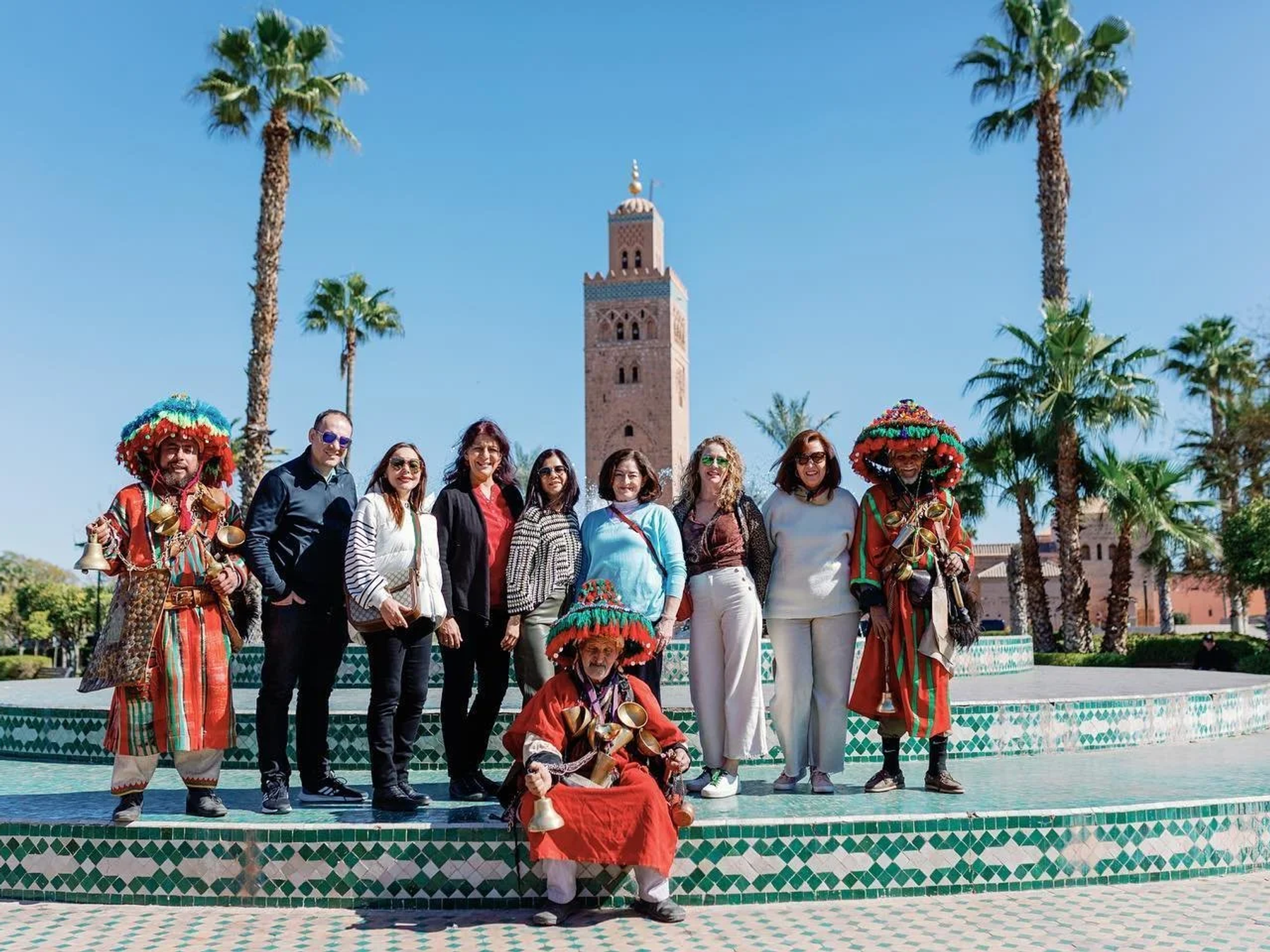
So we'd build a 20 to 28 person trip around your middle band. Hold 2 to 4 seats for your largest supporters. Hold 2 for board members to mingle with the other attendees.
Finally, invite people personally by phone. Fill a trip by email and you get whoever opens the email. Fill it with 40 targeted phone calls and you get the exact people you chose.
The pricing decision
How do you price it? Work back from the answer you gave a moment ago.
A benefit program prices at cost and admits that the goal is not to make money. Being transparent about this wins goodwill, because your members assume you’re earning margin unless you show them there isn't one.
A cultivation program prices at cost plus a margin and says so. Nobody minds paying above cost for a trip that funds the work, and plenty of donors prefer it to a separate ask later.
What you can't do is charge a margin while calling it a benefit, because somebody on that trip will have run a business, or sat on a finance committee, or simply priced a similar tour online, and the moment one traveler works out the difference between what they paid and what the trip cost, you've turned an engagement program into a trust problem you'll spend two years repairing.
One practical note: publish a single all-in number. Your members compare totals against commercial tours, so a price that leaves out flights, tips, and dinners looks dear once they finish comparison shopping.
The five numbers to capture before departure
Measuring starts before anybody flies. Write these five down and date the page:
- Giving over the last 24 months, in dollars. This is the most important thing.
- How many individual donations they’ve made, in the last 24 months.
- How long they've been a member / donor, in years.
- Trips they've taken with you before, as a count (if applicable).
- Volunteer hours or events attended in the last 24 months.
Then check all five metrics again at 12 months after the trip. Compare your travelers against a similar group who stayed home, based on the same giving band and the same tenure. If your travel is causing growth in donations, you’re better off than many other nonprofits.
Associations Now reported 36 percent of associations saying membership had shrunk, against 26 percent in January, and the share reporting better renewal rates fell from 25 percent to 14 percent.
So anything that reliably improves retention is worth tracking; repeat donors account for more than 60 percent of total fundraising dollars.
The follow-through
Here's where most programs fall short: the trip ends, photos get shared, and nothing else happens for a year.
Why is that so costly? Because a shared trip opens a window, and the window closes. So do these five things on a schedule you set before you leave:
- Within 7 days. Photographs, and one personal message from whoever led the trip, not from a marketing email.
- Within 30 days. A call from a real person to every traveler. Not an ask for donations, but a conversation about what they saw and liked.
- At 60 days. Bring travelers together with people who didn't go, either in person or on a call, and let them do the storytelling. This recruits your next trip better than any other marketing.
- At 90 days. The ask, if there is one, made by somebody who was on the trip.
- At 6 months. The invitation to next year, sent to existing travelers before it goes to anybody else.
That last one matters: a traveler who learns about next year's trip from a public newsletter has just been told they're an ordinary member again. Conversely, one who gets a personal note two weeks before anybody else has been told they’re in the inner circle; they book again.
What good looks like
Three signals together, measured at 12 months:
- Increased giving among your travelers against the matched group
- Second trip bookings over 30% inside 24 months
- At least 1/3 of travelers doing something visible after the trip
What counts as visible? A call joined, an event attended, or a friend recruited onto next year's trip.
One signal is not promising by itself. Two is encouraging. Three means we'd tell you to run it again and make it bigger.
And it's worth doing well, because only 11 percent of new donors are retained at all, so anything that turns a first-time supporter into a repeat one is very valuable.
Our member organization travel program to Japan is one example of this. For the approach we took, read the blueprint for custom alumni and donor travel, and on why generic itineraries underperform, read our post on moving beyond cookie-cutter itineraries.
Where doing it yourself falls apart
Designing the program is the part your team's good at. But running eats a development director alive.
Twenty-eight donors means 28 separate bookings from different cities: many with medication to keep cold, some who can't manage stairs, several with a spouse who isn't a member and whose info you don’t have. Every hotel, restaurant, guide, and transfer is its own agreement, often in another currency or another language.
Then you’re abroad. Somebody's fallen ill, a train's canceled, and a restaurant has your booking down for the wrong evening. Your development director's now a travel agent, and the relationships they flew out to build are falling apart.
That's the argument for handing it over. Affinity Travel Co. is a single partner that plans and executes corporate offsites, executive retreats, sales kickoffs, conferences, and incentive travel for groups of 10 to 500+, booking and managing every vendor from venue and air to private dining and ground transport, with staff on site for the program.
We've delivered 30+ programs across 28 countries, and we hold IATA accreditation 36567215, California Seller of Travel 2166658-50, and Florida Seller of Travel 46000, which is worth checking on anyone you hand member money to.
See how we run member organization travel, or request a proposal. For a destination worked through end to end, read our case study on running a member travel program to Japan.
Frequently asked questions
How do we know whether a member travel program is working?
Should we price a member trip at cost or with a margin?
Who should we invite on a member travel program?
What should happen after the trip ends?